Todd Schutte, director of global eLearning at Bona US, answers:
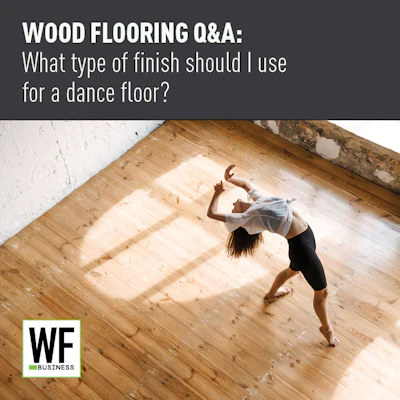
Selecting the right finish for a dance floor is essential for safety, performance and durability. The ideal surface depends heavily on the type of dance being performed. Styles like ballet and contemporary often require a slightly tacky floor for grip and control, while ballroom, jazz or tap may benefit from a smoother, more slippery surface to allow for spins and slides.
Because of this variation, many dance studios use surface additives—specialized waxes or rosin-based compounds—to temporarily alter the floor’s tackiness before a session. These are applied before dancing and then thoroughly cleaned off afterward to maintain the floor’s integrity.
A recommended long-term solution is finishing the floor with a high-performance two-component waterborne polyurethane in an extra-matte sheen. This type of finish offers a neutral slip coefficient that serves as a reliable base for additional surface treatments. The extra-matte sheen reduces glare and provides a very flat surface profile, which is ideal for evenly applying and then thoroughly cleaning off the temporary additives, if needed, for each session (though it may serve just fine as-is).
Additionally, extra-matte finishes are excellent at hiding scuffs and scratches—an important consideration in high-traffic studio environments. Unlike glossier finishes, which can highlight wear and tear, extra-matte keeps the floor looking fresh and professional longer.
When selecting a finish, look for products designed specifically for commercial hardwood flooring settings. These formulations offer superior durability, chemical- and scuff-resistance, fast dry and cure times, low odor and consistent appearance—perfect for studios that demand both performance and aesthetics without long down times when a recoat is needed.