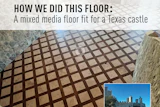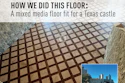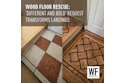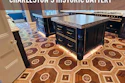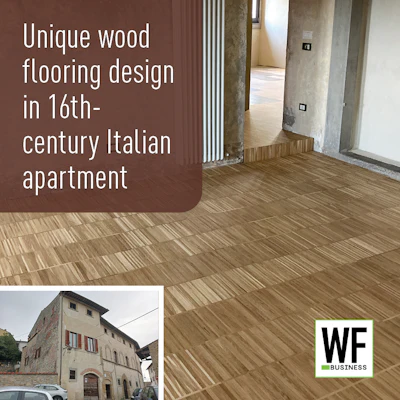
Graziano Calzone, president of Arezzo, Italy-based C&C Parquet, was brought into this project at Palazzo Apollonio after a chance meeting with the homeowner on another job site. The setting was the top-floor apartment of a 16th-century residential building, which was formed by the merger of several medieval buildings and is protected by the Ministry of Cultural Heritage for its historical and architectural value. All elements and technical decisions for the project had to be shared with the Ministry, Graziano says, to ensure the renovation preserved the apartment’s elements dating back to the Middle Ages. Together, Graziano and the homeowner designed a flooring pattern using Slavonian oak that the homeowner procured from leftover projects. The boards came to Graziano cut into 10-by-250-millimeter strips (⅖ by 8⅘ inches). To better visualize the small planks and break up the pattern, Graziano and the homeowner decided to add strips of the same wood between each row. Given the old building’s irregular walls, Graziano says he had to draw reference lines across the room to ensure the pattern would align with the rooms and look straight. Then the boards were glued down, sanded and completed with a clear low-matte finish to give the wood a raw look. The two-week project balanced design and history, but Graziano says his favorite part was the daily morning coffee ritual he shared with the homeowner.

 All elements and technical decisions had to be shared with the Ministry of Cultural Heritage to maintain the apartment's historical and architectural value.
 Graziano and the homeowner designed a flooring pattern using Slavonian oak that the homeowner procured from leftover projects.
 The boards were glued down, sanded and completed with a clear low-matte finish to give the wood a raw look.