I run a refinishing company in Atlanta. Eight years, north of 800 floors. A few years in I also got my real estate license, which means I now get the same question from two directions: a homeowner asking what to do with their floors before they list, and an agent asking me the same thing about their seller’s house. Standing in both spots taught me one thing: The wood floor decisions that actually move a real estate sale are almost never the expensive ones. And being honest with the homeowners about making the less expensive choice earns the homeowner’s trust and the agent’s next five referrals.
Here is what actually matters when a floor is about to go on the market, and how I use it to plan for the right job instead of the biggest one.
Refinish, and say “don’t replace” out loud. Most sellers assume tired floors mean new floors. They don’t. A sound floor with a beat-up finish photographs and shows like a brand-new floor once it’s sanded and coated, and buyers do not pay a premium for “new hardwood” over “hardwood in great shape.” What they reward is real wood that looks cared for. When I tell a seller their existing floor is an asset and we just need to bring it back to life, I’m leaving the bigger replacement ticket on the table on purpose. That sentence is the most profitable thing I say all day, because it’s the one that makes them trust every other number I give them.

Steer the color toward the buyer, not the seller. This is where wearing the agent hat pays off. A homeowner staying put should get whatever color they love. A homeowner selling in 90 days should get the color the widest pool of buyers will accept, which is a natural or mid-brown tone, not the very dark or gray-washed look they saw online. I’ve watched buyers cool on a house because the floors look like somebody else’s strong taste. Pre-list is not the time to spec a polarizing stain. Guide them to safe, and let them save the bold choice for the house they’re keeping.
Recoat when the floor has only lost its shine. If the wood floor’s only problem is a dull, scuffed finish, a screen-and-recoat gets it listing-ready at a fraction of a full resand, and faster, which matters when a seller is racing toward a listing date. Walking a client past a full sand they don’t need is not lost revenue—it’s the move that gets you called for the rental they own across town. Just know your limits: Deep gouges in the wood, a color change or a previously waxed or contaminated surface will fail an adhesion test, and a recoat that peels becomes your problem, not theirs.
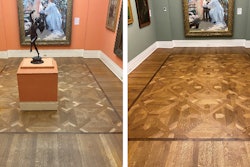
Make it read as one floor. Buyers and appraisers notice the seam where good floor meets worn floor, or where the species or color changes at a doorway. For resale, evenness beats excellence in a single room. If the living room is perfect and the connected hallway is gray and scratched, you haven’t helped the sale. Plan for one connected run with one finish and one tone. That’s usually a bigger and better job for you, too, but pitch it to the client as consistency, not as an upsell, because that’s what it actually is.
Tell them where to stop spending. Closets, the back of the pantry, the spare room nobody stages … none of it returns a dollar at resale. Neither does chasing a flawless, furniture-free showroom finish on a floor people will walk across in shoes the week it sells. When you point at the places not to spend money, the seller hears an honest contractor, and honest contractors get the listing photos forwarded to the next seller in that agent’s pipeline.
Accommodate the listing timeline. Pre-sale work is not a normal job. The house is staged or about to be, so dust control is not a nicety, it’s the difference between getting hired again and getting blamed. Build in cure time before the stager and the photographer arrive, and sequence around the painters. The pro who quietly manages that calendar is the one the agent will use on the next six houses.
None of this is about doing less work. It’s about doing the right work and being the person in the room who can connect a floor decision to a resale dollar. Do that, and you stop being a quote the homeowner is stacking against two others. Instead, you become the advisor the homeowner and their agent both call first. In this business, that relationship is worth more than any single job.
The Pre-list Wood Floor Walkthrough: A Four-Question Field Guide
 In this foyer, the stair treads were refinished to match the field and the risers painted so the floor and stairs read as one continuous surface.
When a seller or listing agent brings you in before a home goes live, the goal isn’t the biggest invoice—it’s to get the most money for the seller at closing. Ask yourself these four questions during your initial walkthrough:
1) Is the damage in the finish, or in the wood? Scuffs, gray traffic lanes and dull sheen live in the finish. A screen-and-recoat restores them in a day, often for a fraction of a full refinish. Cupping, deep gouges, pet stains that reach the wood, or bare worn-through spots mean a full sand and refinish. Don’t sell a refinish when a recoat closes the gap.
2) Do the floors read as one surface? Buyers notice the breaks: a refinished living room against a tired hallway, or new boards that don’t match the old. Getting everything to read as one continuous floor often adds more perceived value than the species or the stain color. Price the transition, not just the room.
3) Is the color working for the buyer, or the seller? Steer sellers toward neutral, current mid-tones that photograph well and won’t date the listing. This is a sell-it color, not a live-in-it-forever color. The floor should disappear into “move-in ready,” not become a talking point.
4) What does the calendar allow? A refinish needs cure time before staging and showings. If the home lists in five days, a recoat or a targeted repair that’s dry and walkable beats a full refinish that isn’t ready for photos. Match the scope to the timeline, not the wish list.
The pro who protects the seller’s return and who says “you don’t need that” when extra work isn’t necessary is the pro the agent calls on the next 10 listings.